
How do you even define a movie that primarily exists as an invitation to its audience -- an invitation to come and merely laze around with a set of interesting characters, asks Sreehari Nair.

'Pink a movie that's assembled especially for that section of prejudice-free Indians who are all on this side of the screen.' 'Look...there's virtuosity staring at you, 24 Frames per Second.' 'Soak it in; more power to the revolution, more wax to the candlelight vigils,' says Sreehari Nair.

'We are going to see relatively soon an executive order that deals with H-1B and other temporary visas.' 'We are also going to see an executive order on undocumented people.' 'Undocumented Indians comprise the largest population growth of all undocumented people in this country.' 'Just because India is not named in this executive order doesn't mean it won't be in the future.'

One shocking finding of the investigation was the extent to which sexual violence was committed against detainees, often extremely brutally, by the Sri Lankan security forces, with men as likely to be victims as women.

'India was in no position to wage another war in 1965, having suffered a morale-shattering defeat in 1962. The three services were in the middle of a modernisation and expansion phase and therefore not fully trained or battle-ready.'

'This is a movie made with this gaze fixed on its immediate well-wishers, while at the same time it squints hard looking for those swaying back and forth on the fence,' notes Rohit Sathish Nair.

While filled with startling insights and questions, and buoyed by terrific performances throughout, Newton suffers from a lack of end-to-end clarity. It is a near-great film but one that for some reason doesn't express itself fully, feels Sreehari Nair.
The verdict could impact a range of life choices of Indians, including food habits and sexual orientation.

'Of the countless protagonists I encountered at the movies in 2015,' says Sukanya Verma, 'these seven are enduringly unique and notable. They possess that extra something that's not always on paper but earns distinction on the silver screen.'

In the pitch dark of the African night, a herd of cape buffaloes gather at the watering hole for a drink, taking care to stay by the edge to avoid the crocodiles lurking in the depths. In Gangiova, a village in Romania, a doctor places her stethoscope to the chest of a newborn baby, listening intently for the beating of his tiny heart. These are just some of the moments that have been picked by the judges for the Sony World Photography Awards. For the 2017 competition, photographers entered 227,596 images across the awards' Professional, Open and Youth categories. The Open competition winner will receive $5,000 (Rs 3.3 lakh), Sony digital imaging equipment and flights and accommodation to the awards ceremony at Somerset House in London. Sony World Photography Awards has been kind enough to share some of their shortlisted pieces with us.
'There was an overt campaign and there was a covert campaign. The overt campaign may be development, government, and all this nonsense. But the covert campaign, which Mr Amit Shah was doing, was far more important with the help of RSS cadres. This has been an RSS election. From day one I have been saying, this is not Congress versus the BJP, this is Congress versus the RSS,' says Jairam Ramesh, one of the key strategists of the Congress party.

'The year in pictures' treks across the globe, looking back on the moments that shaped 2016. From the United States presidential race, to demonetisation in India to the refugee crisis, the news has kept pouring in. Here are our top 50 moments from the world.

Rajeev Srinivasan on the disastrous after-effects of a made-up spying incident

'Little about this regime, given its vindictive credo, is a complete surprise. But we were still taken aback by the CBI raid as it was a complete abuse of due process.' 'These are not legal inquiries, but abusive use of State power. They are not legitimate investigations, but a witch-hunt.' 'Ours is a typical, classic case of the State and its organs being used as an outlet for motivated vendetta of the vilest kind.'
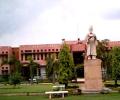
Attorney General Mukul Rohatgi's stand that AMU is not a minority university reveals the anti-minority stand of the political party now in power, says Mohammad Sajjad, outlining the long history behind one of India's premier universities.
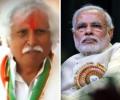
Narendra Modi's mother washed utensils to make a living. Madhusudan Mistry's grandmother, who brought him up, was a vegetable vendor. Mistry's trajectory from poverty to membership of the all powerful Congress Working Committee is moving. the man who has Rahul Gandhi's ear and is all set to take on Narendra Modi in Vadodara, speaks to Rediff.com's Sheela Bhatt in a fascinating interview.

'Whether it's investments in Kashmir, building naval facilities, or selling top-of-the-range military equipment, Pakistan could well benefit more under Xi's watch.' 'Do Chinese concerns about the 'Islamisation' of Pakistan give it pause about how quickly to move forward with security and economic projects? At the moment the indication is quite the opposite: China is doubling down on its support to Pakistan, partly because of its fears about where the country is headed.'
 © 2026 Rediff.com - Advertise with us - Disclaimer - Privacy Policy - Sitemap - Feedback - About us - Terms of use - Grievances